
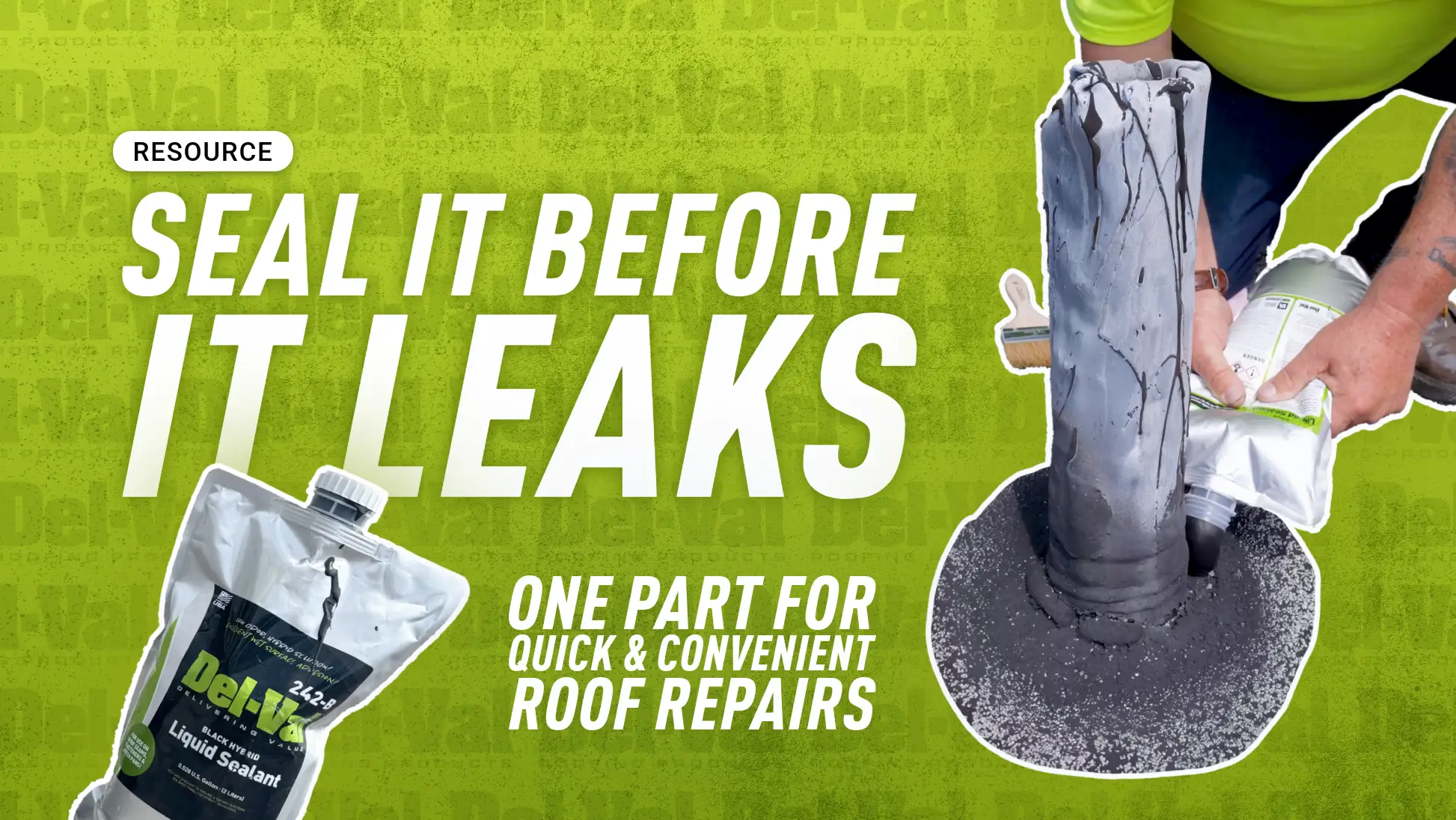
A roof penetration can be one of the most vulnerable details on a commercial roof. Pipes, conduits, vents and other components pass through the roof surface, creating a transition that needs to remain secure through weather, temperature changes and normal building movement.
In this repair, an old lead pipe penetration had developed a split where the pipe met the roof surface. That split may look small, but it can create an opening for water to enter the roofing system. To address the detail, Del-Val 242 Hybrid Liquid Sealant was applied around the connection to coat the split and help create a flexible, water-resistant seal.
Del-Val 242 is a single-component silicone/urethane hybrid sealant used by roofing professionals for roof repairs and pitch-pan filler. It is intended for use on penetrations, seams, curbs, flashings and pitch pans across a wide range of surfaces.
Why Pipe Penetrations Need Attention
Roof penetrations are exposed to movement from multiple directions. The roof expands and contracts with temperature changes. Pipes and rooftop equipment may shift slightly. Building movement can also place stress on the connection between the penetration and the roof surface.
Over time, that movement can contribute to splits, cracks and separation around the detail. Once the seal is compromised, water can travel below the roof surface and potentially affect insulation, decking or interior areas of the building.
Common warning signs around roof penetrations include:
- Splits or cracks where the pipe meets the roof
- Deteriorated mastic or sealant
- Loose or damaged flashing
- Open edges around the penetration
- Evidence of ponding water near the detail
- Water stains or active leaks inside the building
Repairing a Split Around a Roof Pipe
The purpose of this repair is straightforward: seal the opening before water can use it as a pathway into the roof system. The damaged area around the old lead pipe is coated with Del-Val 242 Hybrid Liquid Sealant, allowing the material to flow into and cover the split.
The product has a semi-self-leveling consistency, which helps it move into the repair area while maintaining enough body for roof details and vertical applications. After cure, it remains flexible, an important property for areas that may move over time.
Proper preparation still matters. Repair areas should be evaluated and prepared according to the applicable product instructions before material is applied. Good penetration-sealing practices call for clean, sound bond surfaces so the repair material can adhere correctly.
Why Del-Val 242 Fits Service Work
Roof repair crews often need products that are ready when a detail fails. Del-Val 242 comes in a 2-liter pouch that is no-mix, easy to carry, store and keep available in a truck or work bag.
The pouch format can be especially useful for:
- Service calls
- Small penetration repairs
- Flashing and curb repairs
- Pitch-pan filling
- Seam repairs
- Emergency roof maintenance supplies
The product’s silicone/urethane hybrid chemistry is formulated to provide a water-resistant seal and excellent elongation, helping it remain flexible after cure.
Where Del-Val 242 Can Be Used
A split pipe penetration is one use for Del-Val 242, but it is not the only type of roof detail that may benefit from a hybrid liquid sealant. Product documentation identifies applications including penetrations, seams, curbs, flashings and pitch pans.
Typical repair uses include:
- Pipe and conduit penetrations
- Pitch pans and pitch pockets
- Curb transitions
- Flashing details
- Open or vulnerable seams
- Small cracks in roof details
When to Schedule a Roof Inspection
Not every penetration issue is visible from the ground. A roof inspection can identify split sealant, damaged flashing, open seams and other issues before they become active leaks.
Consider requesting an inspection if you notice:
- Water stains on ceilings or walls
- Leaks near rooftop mechanical equipment
- Cracked sealant around a pipe or curb
- A roof that has not been inspected recently
- Recent HVAC, electrical or plumbing work on the roof
Addressing a small split early may prevent a larger roof repair later.
Protect the Detail, Protect the Roof
Pipe penetrations may be small compared with the size of the roof, but they can create a major leak risk when their seals fail. A targeted repair with the correct product, proper surface preparation and regular inspection can help keep water out where the pipe meets the roof surface.
Del-Val 242 Hybrid Liquid Sealant offers a field-friendly option for sealing roof penetrations, flashings, seams, curbs and pitch pans. Its compact 2-liter pouch makes it easy to keep on hand for service work, while its flexible silicone/urethane hybrid formula is designed to support water-resistant roof repairs.