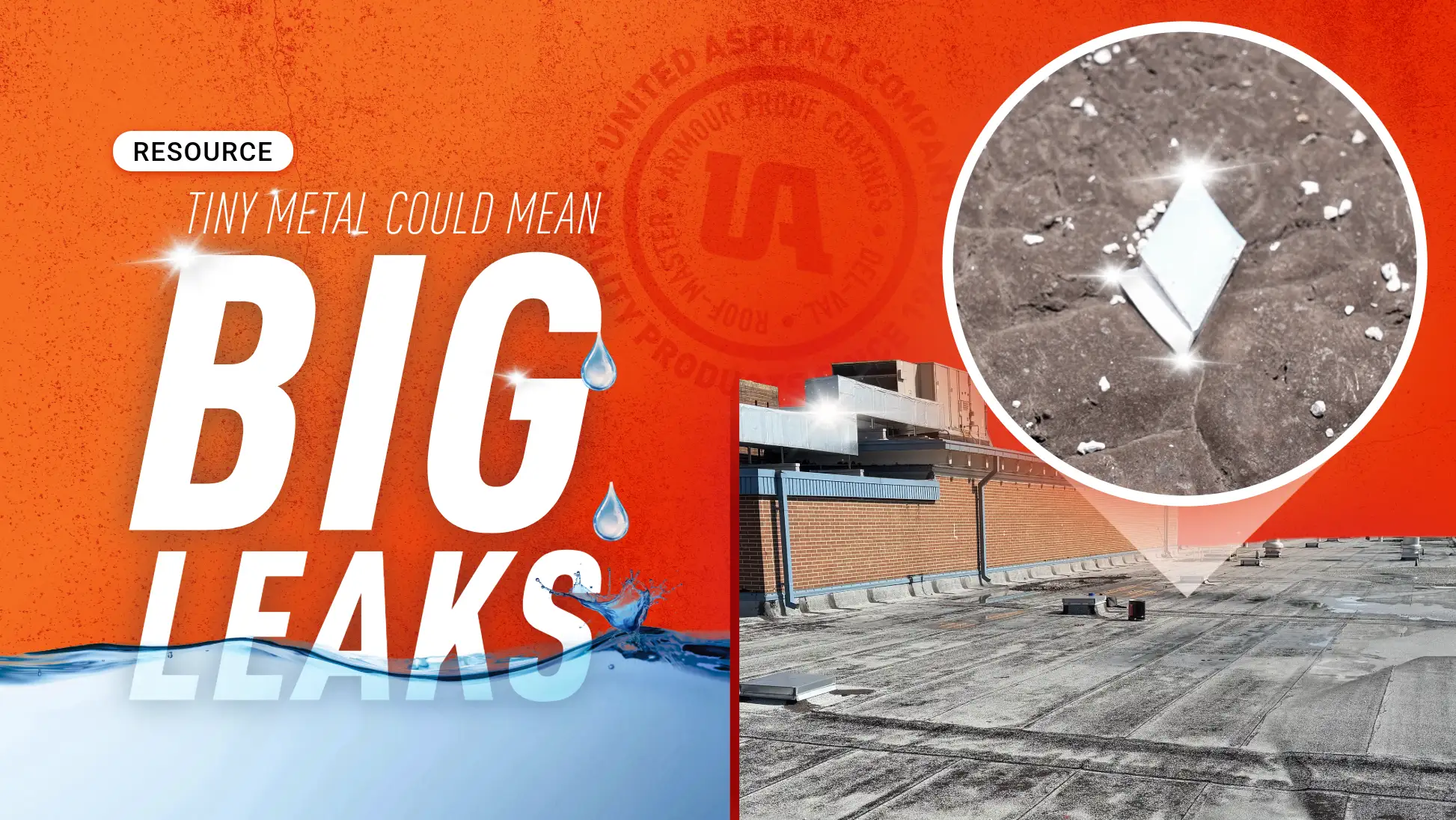
Loose metal, cutoffs and flashing scraps can create avoidable problems on nearly any commercial roof. The roof shown in this example is an asphalt system, where leftover gutter tin can shift across the surface, contribute to drainage-area debris and potentially damage an aging roof over time. On thinner single-ply systems such as TPO and EPDM, sharp metal can present an even greater puncture risk. In every case, it is exactly the type of small issue a regular commercial roof inspection should catch before it becomes a leak.
Metal scraps may shift with wind, water, foot traffic or routine rooftop maintenance. Over time, a sharp edge can press into the membrane, scrape across the surface or create a puncture that allows water into the roof system. Roof inspection guidance calls for examining the membrane for cuts, punctures and tears, while drains, gutters and scuppers should be inspected for debris, proper flashing and a clear path for water to exit the roof.
Why Loose Gutter Metal Is a Roof Risk
Gutters and edge metal are common components on commercial roofs, but the work involved in installing or repairing them can leave behind sharp material. Tin is often cut with snips, leaving edges that can be sharp enough to damage a roofing membrane.
On a single-ply roof, that metal does not need to be large to cause a problem. A small piece that shifts across the surface can wear into the membrane over time. A piece trapped under other debris can press down in one location and create a puncture.
The danger is that the damage may not be obvious from the ground. By the time a leak appears inside the building, water may already have reached insulation or other layers below the membrane.
Why TPO and EPDM Need Attention
TPO and EPDM are widely used single-ply roofing membranes, especially on low-slope commercial roofs. They can provide reliable performance, but like any roofing system, they are vulnerable to physical damage from sharp debris, dropped tools, rooftop traffic and work around mechanical equipment or edge details.
Commercial roof inspections commonly include looking for membrane cracks, splits, tears and punctures. Inspectors also check flashings, drainage components and roof-edge details for loose materials, debris and conditions that could contribute to leaks.
Common sources of sharp roof debris include:
- Leftover tin from gutter or flashing installation
- Metal cutoffs from rooftop equipment work
- Loose fasteners and screws
- Damaged or unsecured metal flashing
- Materials left behind after maintenance work
- Sharp debris blown onto the roof during storms
How Metal Debris Creates Punctures
A loose metal scrap can cause damage in several ways. Wind can move it across the membrane. Water can push it toward low areas and drains. Foot traffic can press it into the roof surface. In some cases, the metal may sit in one spot and slowly wear through the membrane as the roof expands and contracts.
A puncture can begin as a small opening, but even a small opening can allow water to enter the roof system. Once moisture gets below the membrane, it can affect insulation, create hidden deterioration and complicate the eventual repair.
Warning signs to look for:
- Loose metal or flashing scraps on the roof
- Visible cuts, tears or small holes in the membrane
- Scuffing or abrasion near gutters and roof edges
- Water staining inside the building
- Recent gutter, HVAC or rooftop equipment work
Why Roof Walks Matter
A proper roof walk is one of the best ways to find this type of issue before it becomes a leak. A contractor should inspect more than the open field of the roof. The inspection should include gutters, drains, scuppers, flashing, penetrations, rooftop equipment and areas where other trades may have performed work.
Routine inspections of EPDM roofs are commonly recommended at least twice each year and include checking for obvious problems, removing debris and reviewing drainage and equipment-related conditions. Keeping gutters and drains clear also helps water leave the roof as intended rather than carrying debris into low areas.
A commercial roof walk should include:
- Checking the membrane for cuts, punctures and tears
- Removing loose metal, fasteners and other debris
- Inspecting gutters, drains and scuppers for blockages
- Reviewing gutter and flashing details for loose edges
- Looking at areas around HVAC equipment and service paths
- Documenting damage before it grows into a larger repair
What to Do If You Find a Puncture
If you find sharp metal debris, remove it carefully and inspect the surrounding membrane for damage. If there is a cut, tear or puncture, do not assume it is too small to matter. A qualified roofing contractor can assess the membrane, determine the repair approach and check whether water has entered below the surface.
On an otherwise sound single-ply roof, localized punctures are often repairable when caught early. Repair methods vary by membrane type and roof condition, so the materials and approach should be compatible with the existing system. Del-Val 230 Modified Liquid Rubber Mastic is a good example of a roof repair product that can be used across multiple roof substrates, including EPDM, TPO, metal and asphalt. If you’re looking for a repair to better blend into the roof surface of an EPDM roof, look at Del-Val 231 or Del-Val 229 for a metal roof or gray coated roof.
Preventing Debris-Related Roof Damage
The best repair is the one you never have to make. Contractors performing gutter, HVAC, electrical or other rooftop work should remove metal scraps, fasteners and material cutoffs before leaving the job. Building owners should also make roof inspections part of their maintenance plan, especially after storms, construction work or service visits.
A small metal scrap may not look urgent, but it can be the beginning of an avoidable leak. Finding it early protects the membrane, helps preserve the roof system and reduces the chance of more expensive damage below.
Schedule a Roof Inspection
Sharp metal debris is one of the many small problems that can turn into a large roofing issue when it goes unnoticed. If your commercial roof has recently had gutter work, HVAC work or other rooftop service, an inspection can help identify stray debris, membrane damage and drainage concerns before they lead to leaks.
Contact our team to schedule a commercial roof inspection and discuss repair or restoration options for your TPO, EPDM or other low-slope roofing system.