Even a strong roofing system can develop problems over time.
EPDM roofing is a popular choice for commercial low-slope buildings because it is durable, flexible and cost-effective. But even a strong roofing system can develop problems over time, especially at seams, patches, penetrations and transitions. When that happens, the difference between a temporary fix and a reliable repair often comes down to one thing: prep and product selection.
That’s where fast, secure EPDM repairs come in. A properly cleaned and sealed seam can help stop water intrusion, restore the connection and buy valuable time before a larger repair or replacement is needed. In the field, that usually means using the right mastic, the right surface preparation and the right detail materials to make sure the repair holds up under real-world conditions.
Why EPDM Repairs Need More Than a Quick Patch
EPDM seams can begin to lift because of age, weather exposure, movement, debris or prior repairs that no longer perform. Once that seam starts to open, water can work its way underneath the membrane and spread into areas that were never intended to stay wet.
A quick patch might cover the issue for the moment, but a real repair is about restoring the bond and helping the roof dry back in. That requires cleaning out contaminants, removing loose material and using a product that is designed to secure the seam and stay in place.
For contractors, building owners and facility managers alike, the goal is not just to cover a leak. It is to create a fast, secure repair that helps protect the rest of the roofing system.
Why Clean Prep Matters
The condition of the surface matters as much as the product itself. On EPDM, seams often collect dirt, pollen, dust and old debris that interfere with adhesion. If that material is left behind, even the best mastic will struggle to perform.
That is why clean prep is critical. The repair area should be opened up, cleaned thoroughly and prepared so the mastic can properly bond. This helps ensure the repair locks in place and creates a more dependable result.
A clean repair area also makes the work more predictable. Instead of working over contamination, the product can do what it was designed to do: seal and secure the seam.
The Role of Mastic in EPDM Seam Repairs
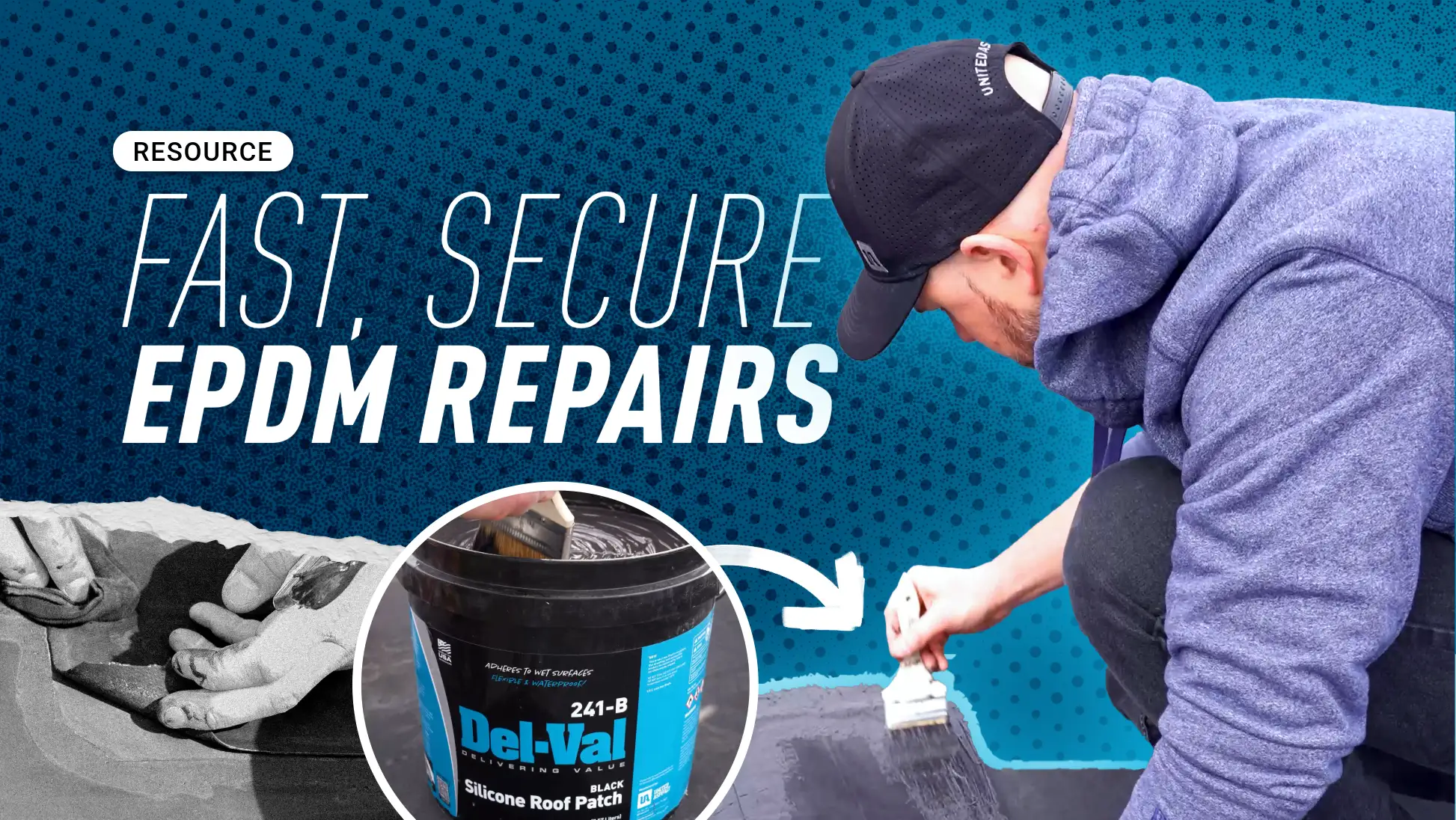
Mastic is one of the most important materials in EPDM repairs because it helps create a strong connection between surfaces. In the case of a lifted seam, the right mastic can be worked into the opening and used to help secure the membrane back down.
Del-Val 241 Black Silicone Mastic is a good example of the kind of product that can be used in this type of repair work. It is designed for practical field application and can help restore a lifted seam when used with proper preparation and technique. For repair-focused content, this creates a natural opportunity to link to your mastic and seam sealant product pages.
Commercial Low-Slope Roofs That Can Often Be Repaired
EPDM is only one piece of the low-slope roofing market. Many different commercial roof systems can benefit from repair and restoration products when the roof is still structurally sound.
Asphalt-Based Roofs
Asphalt-based systems can often be repaired with compatible products when leaks develop at seams, flashings, or transitions. These roofs are common in commercial settings and may respond well to targeted repair work.
Built-Up Roofs
Built-up roofs, or BUR systems, often develop issues in vulnerable areas over time. Repairs can help address splits, blisters, open seams and surface wear without immediately requiring a full replacement.
Modified Bitumen
Modified bitumen roofs are frequent candidates for repair because they tend to show wear at laps, seams and penetrations. Targeted repair products can help restore those areas and improve short-term performance.
Single-Ply Systems
Single-ply roofs like PVC, EPDM and TPO are often repaired rather than replaced when the issue is localized. Seam failure, punctures and flashing damage are common repair targets across these systems.
Metal Roofs
Metal roofs can often be repaired at fasteners, seams, laps, penetrations and panel transitions. Repair products designed for weather resistance and movement can help extend the usable life of the system.
SPF Foam Roofs
In some cases, SPF foam roofs can also be repaired or restored with the proper materials. These systems often need attention at damaged surfacing, splits, or exposed areas that require resealing.
Why Fast Repairs Matter on Commercial Roofs
Commercial roof leaks do not wait for the right moment. Once water gets in, it can affect insulation, interior finishes, electrical systems, operations and tenant comfort. That is why fast repair capability is so valuable.
A secure repair helps stop the immediate issue while protecting the broader roofing system. For property managers and building owners, that can mean less disruption, fewer emergency calls and more control over maintenance planning.
The best repair products are the ones that let contractors work efficiently while still delivering a durable result.
When Repair Makes More Sense Than Replacement
Not every roof needs a full tear-off. In many cases, the right repair approach can help extend the life of the existing roof while controlling cost and downtime.
Repair may be the better path when:
- The damage is localized.
- The roof deck is still sound.
- The issue is seam-related or penetration-related.
- The owner needs a faster, less disruptive solution.
- The building needs temporary or mid-term protection before capital replacement.
That is especially true when the goal is to dry the roof in quickly and stop the spread of water intrusion.
Conclusion
Fast, secure EPDM repairs are about more than covering a leak. They are about clean prep, the right mastic and a repair strategy that helps restore the roof’s performance without unnecessary disruption. When done correctly, these repairs can help protect the building, reduce ongoing damage and support a smarter maintenance plan.
The same repair mindset applies across many commercial low-slope roofs, including asphalt-based systems, built-up roofs, modified bitumen, single-ply membranes, metal roofs and in some cases SPF foam roofs. That makes repair products an important part of any roofing contractor’s toolkit.