How to Reinforce and Seal Vulnerable Details
Roof penetrations are some of the most common places for water to enter a commercial low-slope roofing system. Whether the opening was once an exhaust fan, a vent, a pipe or another piece of equipment, any capped or abandoned penetration needs to be properly restored if the goal is to keep water out. On an asphalt roof, that usually means working carefully around the detail, reinforcing weak points and building a watertight connection that can hold up over time.
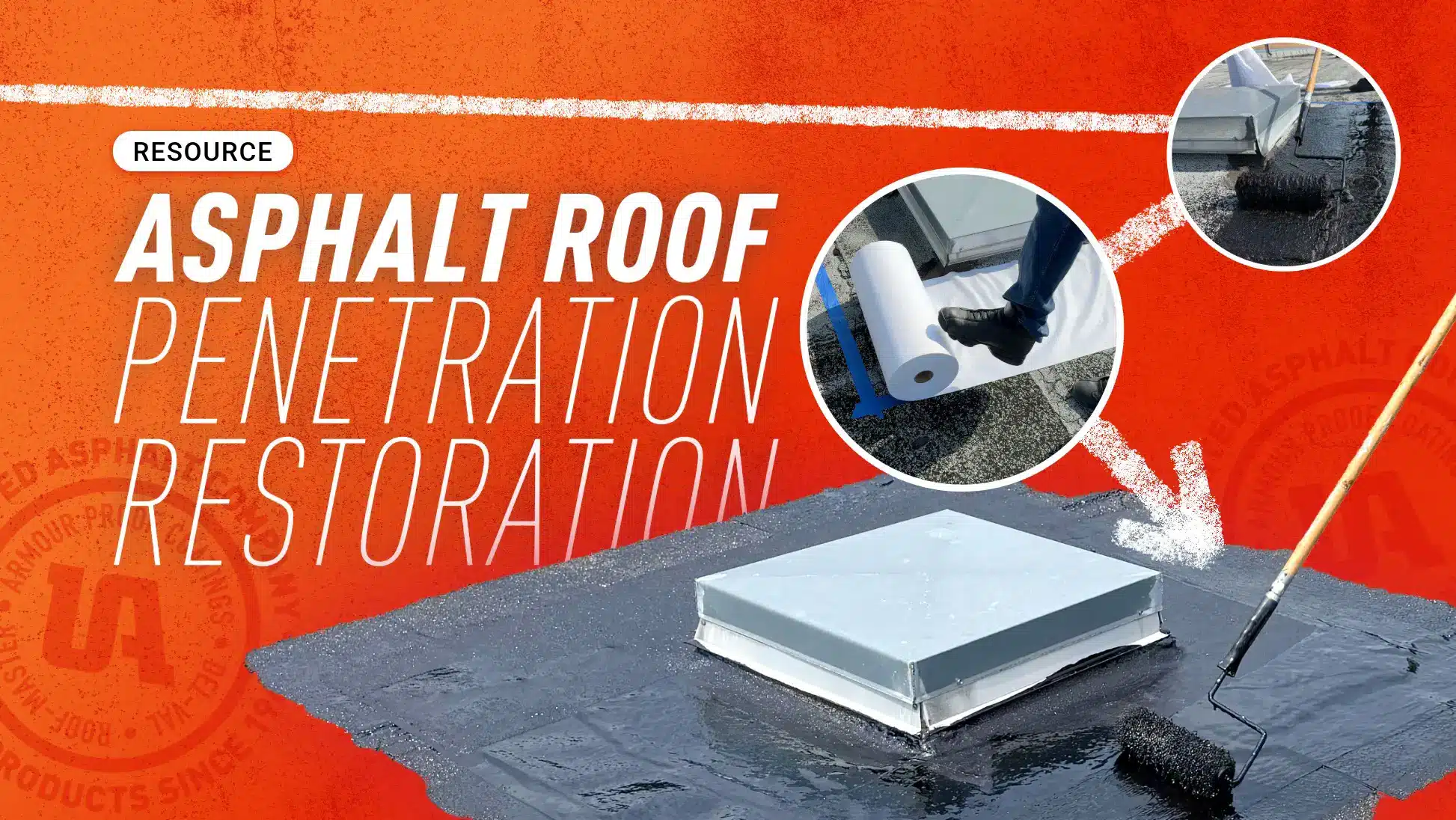
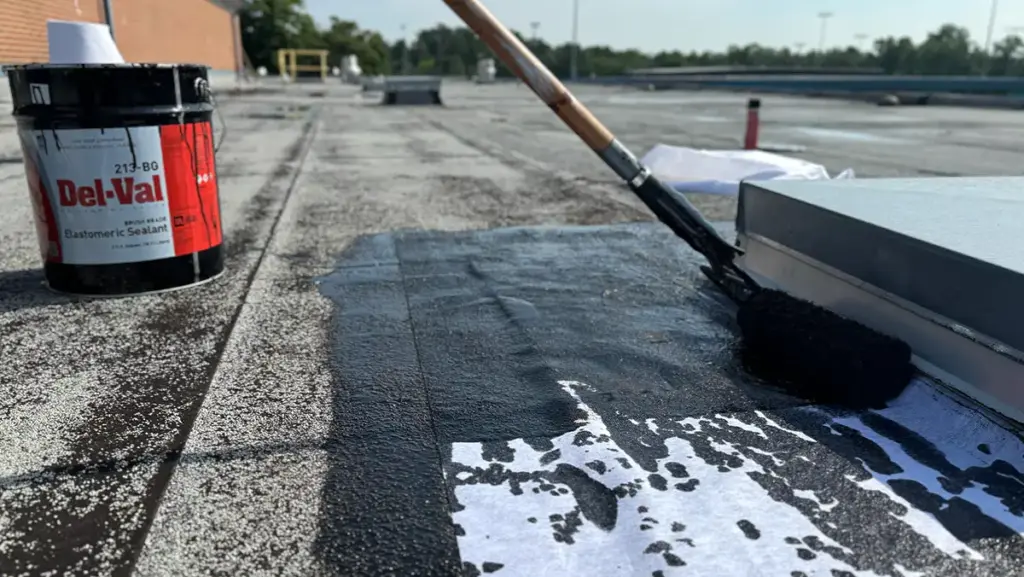
That is exactly what happened in this repair. The roof in question was an old SBS hot mop system with a capped opening that had been left behind after an exhaust fan or similar penetration had been removed. Around that cap was a base flashing made from the same material as the field. To restore the area, Del-Val 213 Elastomeric Sealant was applied around the perimeter and reinforced with 20-inch polyester fabric embedded into the wet coating. A second coat was applied on top, sandwiching the fabric between layers to help create a tight, sealed detail.
Why Roof Penetrations Fail
Roof penetrations are constantly exposed to movement, weather and thermal cycling. Over time, those forces can cause seams to separate, flashing to crack or previous repairs to break down. When that happens, water can begin to work its way into the roof system around the sides of the penetration.
On an asphalt roof, the problem is often not the field itself. The issue is usually the detail around the opening. That is why penetration repair needs to focus on the perimeter, the flashing and the transition between materials. If those areas are not sealed properly, water can find its way in even when the rest of the roof appears to be in decent shape.
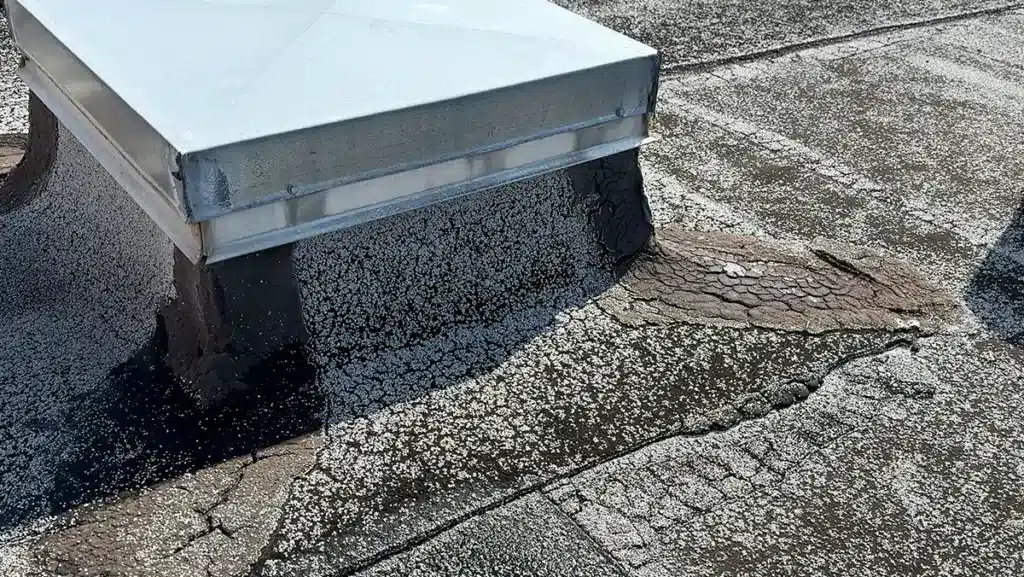
Common penetration problems include:
- Cracked flashing.
- Open seams around penetrations.
- Failed previous repairs.
- Water entering along the sides of the detail.
- Separation caused by age or movement.
Why Reinforcement Matters
A simple surface patch is not always enough around a penetration. These are high-stress areas, which means they need reinforcement to help resist future movement and water intrusion. That is why embedding polyester fabric into the coating is such an important step.
In this repair, the fabric was placed into the wet Del-Val 213 coating and then covered with more material on top. That created a reinforced sandwich effect that helps strengthen the repair and improve water resistance. Instead of relying on a thin surface layer, the detail now has added structure where it matters most.
This type of reinforcement can be especially valuable on older asphalt systems where the roof has already seen years of heat, weather and exposure.
Why Asphalt Roof Details Need Special Attention
Asphalt-based roofs, including SBS hot mop systems, can perform well for a long time, but the details still need maintenance. Penetrations, flashings and terminations are often the first areas to show wear.
Once a penetration starts to open up, water can infiltrate the sides of the cap and work its way under the surface. That can lead to hidden damage, larger leaks and more expensive repairs later. A properly reinforced restoration helps reduce that risk and gives the roof a better chance at continued service.
This repair approach can help:
- Seal vulnerable edges.
- Reinforce weak flashing areas.
- Reduce water intrusion around abandoned openings.
- Extend the life of the existing roof detail.
- Improve performance without a full tear-off.
Where Del-Val 213 Fits In
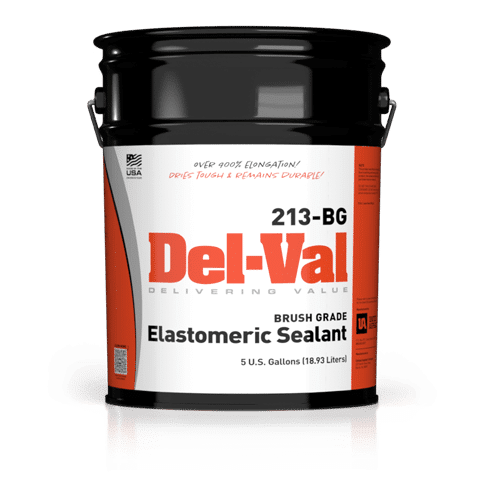
Del-Val 213 Elastomeric Sealant is a practical choice for restoration work on asphalt roofing systems. It is designed to be applied around the perimeter of the detail and work in combination with polyester fabric reinforcement. For repair crews, that makes it a useful product for restoring around capped penetrations, flashing transitions and other vulnerable areas.
When This Repair Method Makes Sense
This type of restoration is a strong option when:
- The roof system is still serviceable.
- The surrounding asphalt material can be repaired rather than replaced.
- You want to reinforce a weak detail without a full tear-off.
- The goal is to stop water from entering around the sides of the cap.
It is a targeted repair method that focuses on the exact area where failure is most likely to happen.
Conclusion
Restoring around a penetration on an asphalt roof is all about making the vulnerable detail watertight again. In this case, an old SBS hot mop roof with a capped opening was reinforced using Del-Val 213 Elastomeric Sealant and 20-inch polyester fabric to help seal the perimeter and keep water from infiltrating around the cap.
That kind of repair is a good example of how targeted restoration can help extend the life of an existing roof while addressing one of the most common leak points in commercial roofing. When the detail is done right, the roof gets a stronger defense right where it needs it most.