

What’s Piling Up on Your Roof?
If you’re seeing piles of granules in your gutters and downspouts and you know your roof is older, your asphalt roof is sending you a warning. Those granules are meant to protect the roof from UV damage, fire, wear from foot traffic and general degradation. When they start coming off in large amounts, it often means the roof surface is deteriorating and drainage areas are starting to clog.
This post walks through what excessive granule loss means, how it can lead to ponding and leaks and what your realistic options are for repair, coating or replacement.
Why Granules Matter on Asphalt Roofs
Granules are not just for looks. They play an important role in protecting the asphalt substrate from UV degradation, providing fire resistance and offering slip-resistant traction for anyone walking on the roof. When granules loosen and migrate away from the areas where they belong, the roof loses that protection.
On an aging asphalt roof, granule loss is a common sign that the roof is nearing (or beyond) the end of its service life. When the granules are no longer doing their job, the asphalt underneath becomes more vulnerable to weather, heat and wear.
What Loose Granules Indicate
Loose granules are a sign of two main problems. First, the roof is deteriorated and the granules are no longer protecting the asphalt substrate from harsh UV degradation, fire resistance and slip-resistant traction. Second, the granules are piling up and migrating in the way of proper drainage, making it harder for the roof to drain and dry as it was designed.
When granules migrate toward drains, they can clog the drainage system and create ponding water. That can lead to accelerated wear, increased leak risk and more frequent maintenance needs.
Common problems caused by loose granules:
- Accelerated asphalt deterioration.
- Reduced UV protection.
- Clogged drains and drainage issues.
- Ponding water and water intrusion.
- Cosmetic issues from granule runoff.
Granule Migration and Drainage Issues
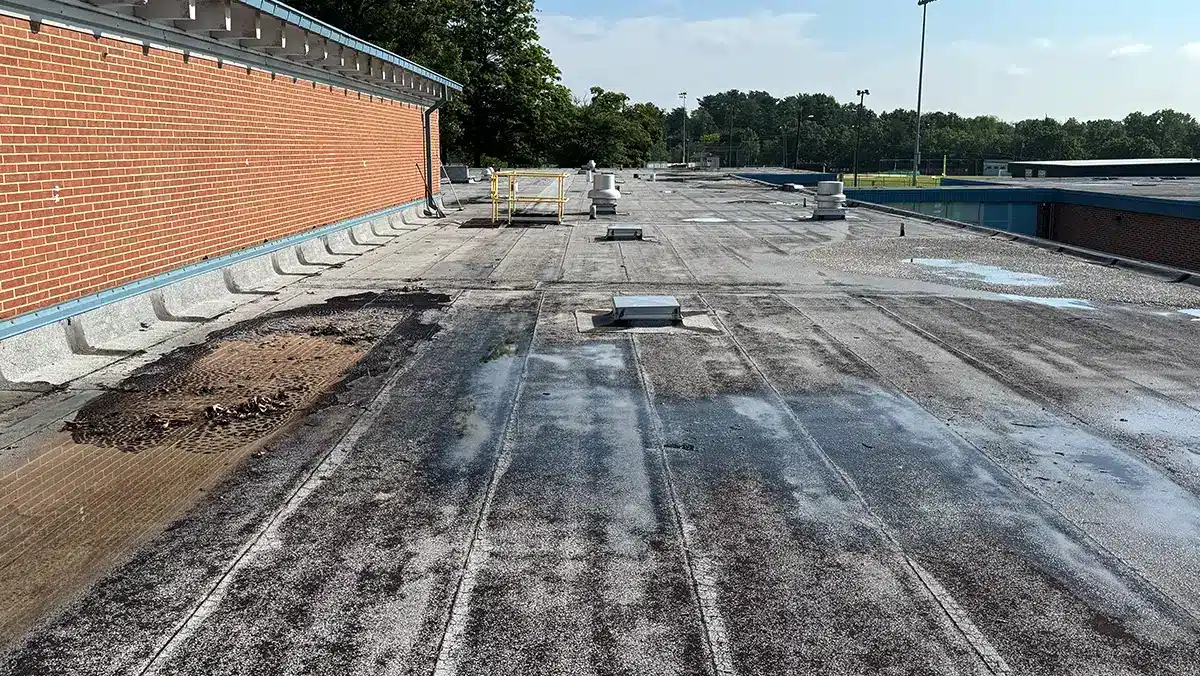
Granules tend to migrate toward the low points on the roof, which often means the drain areas. When they pile up around drains, they can block water flow and create ponding conditions. In this case, we found up to two inches of loose granules around the drain, sitting in a pool of water and making it harder for the roof to drain properly.
That kind of blockage can turn a simple drainage issue into a larger problem over time. When water cannot exit the roof efficiently, it sits on the surface longer than it should, which can accelerate wear and increase the risk of leaks.
How granule buildup affects drainage:
- Blocks water flow toward drains.
- Creates ponding water conditions.
- Traps debris and moisture.
- Increases maintenance needs.
- Contributes to further roof deterioration.
Why Building Owners Should Care
Granule loss is not just a roofing problem. It can also create cosmetic issues for building owners. When granules wash off the roof, they can leave stains on walls, walkways and landscaping. That can make the building look older and less maintained than it actually is.
Regular roof inspections can help catch granule loss early, before it leads to drainage issues and water intrusion. A good roofing contractor will check for granule buildup around drains, signs of roof deterioration and drainage problems during routine maintenance calls.
Benefits of regular inspections:
- Early detection of granule loss.
- Identification of drainage issues.
- Reduced ponding water problems.
- Extended roof service life.
- Improved building appearance.
When to Take Action
Granule loss is a sign that the roof is aging. If you are seeing loose granules around drains, in gutters or on the ground below, it is time to take a closer look at the roof condition. In some cases, a repair or restoration may help extend service life. In other cases, replacement may be the better option.
The key is to address the issue before it leads to larger problems. When granules are no longer doing their job, the roof is more vulnerable to weather, heat and wear. That can lead to leaks, drainage issues and more expensive repairs down the line.
Signs it may be time for action:
- Visible asphalt exposure.
- Frequent clogged drains.
- Ponding water issues.
- Granule runoff staining the building.
If you’re seeing the signs, here are your options
If you’re noticing heavy granule loss, clogged drains and ponding water, you have a few paths forward depending on the roof’s overall condition. A qualified roofing contractor can help you decide which option makes the most sense for your building.
- Full tear-off and re-roof: If the roof is beyond saving due to extensive deterioration, deck issues or age, a full tear-off and re-roof may be the only long-term solution.
- Roof coatings and restoration: If the roof deck is sound and the roof is still a good candidate, coatings can renew the surface, improve water resistance and extend service life without a full tear-off.
- Request a roof inspection: If you’re not sure whether your roof can be restored, a professional inspection will evaluate the condition, identify problem areas and recommend repair, restoration or replacement options.
Conclusion
Sandcastles are for the beach, not your roof. When granules start piling up around drains, it is a sign that the roof is aging and losing its protective layer. That can lead to drainage issues, ponding water and further roof deterioration if the situation is not addressed.
For building owners and facility managers, regular roof inspections and maintenance calls are one of the best ways to catch these issues early. A good roofing contractor will check for granule loss, drainage problems and signs of roof deterioration during every visit. When the details are done right, the roof gets a stronger defense right where it needs it most.